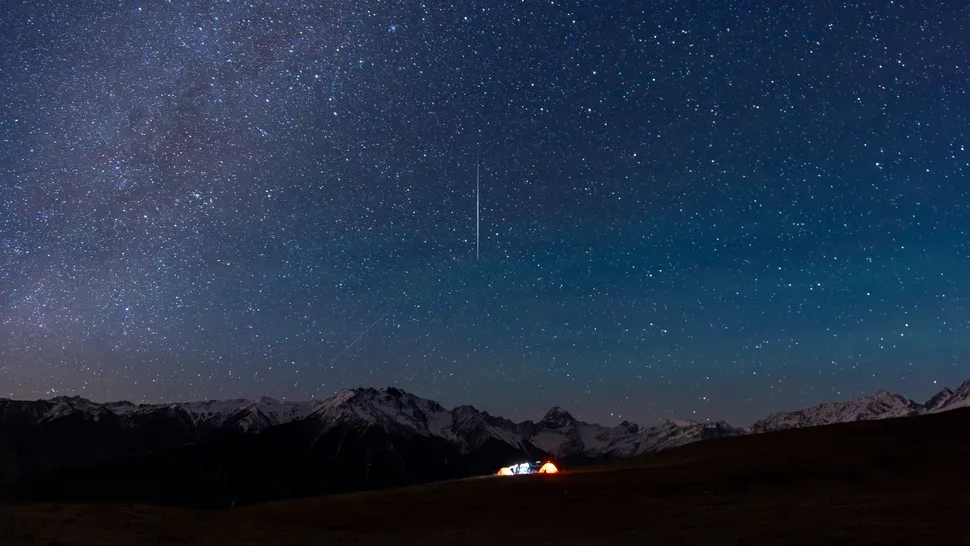
On the night of December 13th, holiday cheer fast approaching, a light shines through your window! Not a star, nor the moon — a meteor!
Every year in the middle of December, anyone around the world can expect to see meteors shooting through the sky!
These are called Geminids, or the Geminid shower, and are an annual meteor shower seen from all around the world! The shooting stars in question are debris of the asteroid 3200 Phaethon, an asteroid close to Earth.
The term “geminid” comes from the parent asteroids’ close proximity to the constellation Gemini.
Geminid showers have been recorded from 1862, originally by observers in the North hemisphere, but some evidence shows that they started even earlier.
This year, in New Jersey, it was particularly cloudy both nights that meteors were expected, but if you looked hard and long enough, you could see a burst of light between snowy clouds.
The Geminids are just one of Earth’s annual meteor showers, though, some others include:
Orionids – taking place in mid to late October, caused by Earth passing through debris from Halley’s comet, named after the constellation Orion.
Ursids – usually peaking near the December solstice, from dust and debris from comet 8P/Tuttle in the Little Dipper constellation, formally known as Ursa Minor.
Perseids – a show comprised of bright and fast comets, believed by many to be the best globally-viewed shower. It’s named after the constellation Perseus, and made from debris of the comet Swift-Tuttle.
All in all, meteor showers are a beautiful display of nature. Try your best to catch your wishes!